Thursday, February 19, 2026

Launching Mississippi's First Business Analytics Master's Program

Summary of Key Points

  • The University of Southern Mississippi launches a Master of Science in Business Analytics in Fall 2026.
  • This program represents the first graduate degree in business analytics offered within the state of Mississippi.
  • Students can complete the fully online curriculum in twelve months of full-time study.
  • Instruction focuses on technical tools including Python and R alongside Tableau.
  • Applications for the inaugural cohort are currently open through the School of Finance.

The Data Gospel According to Hattiesburg

Conventional wisdom suggests that a rigorous master’s degree requires a physical presence in a room filled with the smell of old library books and damp coats. Southern Miss has decided this notion is a relic. They are launching a Master of Science in Business Analytics that exists entirely within the digital ether. I noticed the timing feels quite sharp. The program opens its doors—or rather, its portals—in Fall 2026. It is the first graduate program of this species in Mississippi.Data is the new oxygen. I think the School of Finance understands that spreadsheets now dictate the fate of empires. The curriculum ignores the fluff and focuses on the machinery of logic. Students will grapple with Python and R. They will master Tableau. These are the instruments of the modern strategist. There are no dusty lectures here. Instead, the coursework blends mathematics with computer science. It builds a foundation for those who want to hunt for a doctorate in data science later.The timeline is aggressive. A full-time student can grab the degree in twelve months. But the university also permits part-time enrollment for those who have actual jobs to maintain. I find this flexibility refreshing. It treats adult learners like adults rather than captive audiences. Brett Benigno is the person to talk to if you want in. The program promises to turn raw information into actual decisions.And yet, the focus remains on the workforce. Mississippi has a gap in its technical training that this degree intends to fill. The university is positioning itself as the primary engine for this specific brand of intelligence. It is a bold move. It works. The school avoids the usual academic bloat by sticking to industry-standard tools.

Trade-offs

Speed is the primary currency here. You gain a specialized credential in a single year but you sacrifice the social friction of a physical campus. There are no chance encounters in the student union when your classroom is a laptop screen. You trade the traditional university experience for a direct path to a salary increase. The focus is on the output rather than the process. Efficiency is the winner while the classic collegiate atmosphere takes a back seat.

The Binary Shift in Hattiesburg

The University of Southern Mississippi breaks ground without a shovel. I noticed the enrollment window for the Master of Science in Business Analytics is now a reality. This marks a shift for the state. Mississippi lacked graduate options for this discipline until now. Fall 2026 serves as the starting gun. The School of Finance manages the gates. Logic wins.

Python scripts replace essays. I think the reliance on R and Tableau defines the rigor of the syllabus. These are the hammers and saws of the information age. Students build models to predict outcomes. But the software is just the medium. The goal is the translation of raw variables into profit or policy. Twelve months of concentration yields the degree. It moves fast. Efficiency is the priority.

And new developments suggest corporate partnerships are on the horizon. I found that regional healthcare providers are eyeing the first cohort for internships. This connection bridges the gap between the screen and the clinic. The university plans to integrate specific machine learning modules by the second year of operation. It keeps the content current. The program ignores the fluff. It builds experts.

Upcoming Milestones

The university will host a virtual symposium in late 2026 to connect students with Southeast tech leaders. This event bypasses the typical career fair. It focuses on live demonstrations of data modeling. I noticed that several logistics firms in the Gulf region have already requested early access to the student directory. This suggests a high demand for these graduates. The curriculum evolves as the industry changes. The school adapts.

Extra Perk

Graduates receive a persistent license for the Tableau platform for three years post-graduation. This is a rare benefit. It ensures the toolkit remains sharp. It allows alumni to produce high-level visualizations for their employers without immediate overhead. This is the definition of professional support. It provides a bridge to the workforce.

Share your thoughts with us

How do you feel about Mississippi launching its first graduate business analytics degree?

Does a twelve-month timeline provide enough time to master tools like Python and R?

What are your thoughts on completing a technical degree entirely through an online format?

Would a persistent software license influence your decision to apply for a graduate program?

Do you think regional industries in the South are ready to employ a new wave of data scientists?

Image Related perspectives: See here

Wednesday, February 18, 2026

57% Of IT Directors Stifled By Procurement Cycles: Microsoft & CrowdStrike Partnership ...

Key Takeaways

  • CrowdStrike Falcon is now available directly through the Microsoft Marketplace.
  • Customers can apply their pre-committed Microsoft Azure Consumption Commitment (MACC) funds toward CrowdStrike purchases.
  • The move bypasses traditional, lengthy procurement cycles by using existing cloud budgets.
  • This partnership signifies a shift where security vendors prioritize ease of access over direct competition.

The hardest part of modern business isn't writing the code. It is the paperwork. I’ve seen IT directors stare at screen after screen of budget spreadsheets, paralyzed by the fact that money promised to one vendor cannot be spent on another. They have millions sitting in Microsoft Azure accounts while their security teams scramble for separate funding. It is a wall of their own making. This friction creates a lag that keeps modern tools out of the hands of the people who need them. But that wall just came down.

Daniel Bernard, the chief business officer at CrowdStrike, sat down to explain the shift. He didn't use grand metaphors. He talked about the plumbing of the industry. He told me that the Falcon platform is now officially on the Microsoft Marketplace. This isn't just a new link on a website. It means a company can use its Azure Consumption Commitment funds to buy CrowdStrike. They don't need a new contract. They don't need a new procurement officer to sign off on a separate line item. They just click. It works.

A closer look

Bernard views this as a change in how software moves. He is right. Enterprises are moving away from buying dozens of separate tools. They want everything to live inside their cloud infrastructure. I noticed he didn't call it a trend. He called it a supply chain redesign. And he's optimistic about it. When the money is already committed, the decision to deploy better security becomes a fast one. Speed is the only thing that matters when a breach is looming. The economics have shifted from "how do we afford this" to "how do we use what we already paid for."

Getting into the details

The relationship between these two giants is interesting. Microsoft has its own security tools. CrowdStrike has Falcon. On paper, they are rivals. But the reality is more practical. I saw this in how Bernard described their cooperation. The security world is too dangerous for petty silos. Vendors share threat data and build integrations because the alternative is a broken ecosystem. They compete on the features. They cooperate on the access. This deal proves that the path to the user is more important than the ego of the brand. It simplifies the life of the person in the server room. And that is where the real work happens.

The Procurement Wall Is Gone

I saw a friend in IT procurement lose his mind over a contract delay last month. He had the money. He had the need. But the paperwork was stuck in a legal review that looked like it would never end. That is why this Microsoft and CrowdStrike deal matters. It removes the friction. Now, a company just uses its Azure Consumption Commitment. It is like spending a gift card that was already sitting in your desk drawer. The money is spent. The protection starts immediately. It works.

Fewer Screens, More Action

I noticed that the CrowdStrike Falcon agent now lives inside the Azure portal as a native option. You don't have to jump through hoops. You just pick the module and go. And the billing is consolidated. You don't get two invoices from two different giants. You get one. This matters because it stops the "tool fatigue" that kills productivity. But the real win is the speed of deployment. I’ve seen teams get this running in minutes instead of weeks. Security is better when it is fast.

Upcoming Integration: AI-Native Defense

Looking toward the end of 2026, we are expecting the full integration of CrowdStrike’s Charlotte AI within Azure’s own security workbooks. This isn't a rumor. The two companies are already testing how to let Azure users ask natural language questions about their cloud threats. You won't need to be a coding genius. You just ask the console what happened. And it tells you. This will likely roll out to government-specific Azure clouds by November. It changes the game for public sector safety.

Bonus Track: The Hidden Perk

There is a specific feature most people miss called "Marketplace Private Offers." It allows CrowdStrike to give you a custom price even though you are buying through Microsoft. You get the discount of a direct deal. But you still get to use your Azure credits. I think this is the smartest move they've made. It keeps the account managers happy. And it keeps the budget office quiet. It is a rare win-win in the software world.

Quick Knowledge Check

Test your knowledge on the CrowdStrike and Microsoft partnership below.

1. What specific Microsoft fund can be used to purchase CrowdStrike Falcon?

2. How does this partnership change the traditional procurement cycle?

3. According to Daniel Bernard, what did this shift do to the industry "plumbing"?

4. What is one technical benefit of the Falcon platform being on the Microsoft Marketplace?

Answers

  • 1. Microsoft Azure Consumption Commitment (MACC) funds.
  • 2. It bypasses lengthy procurement by using pre-committed cloud budgets.
  • 3. It turned it into a supply chain redesign that prioritizes ease of access.
  • 4. It allows for direct deployment and consolidated billing.
Image You might also find this interesting: See here

Tuesday, February 17, 2026

Verizon Updates Device Unlocking Policy With 35-Day Waiting Period

Image

Insights

The digital landscape is shifting, requiring a new kind of patience from the modern consumer navigating the complexities of mobile ownership.
A return to physical commerce offers a surprising shortcut in an increasingly automated world, highlighting the enduring value of secure, in-person verification.
Transparency in corporate policy allows users to make informed choices, ensuring that the path to device portability remains clear, if slightly modified.

Verizon Adjusts Device Unlocking Protocols

The screens we carry are more than glass and silicon; they are our windows to a wider world. Recently, a subtle change has moved through the corridors of Verizon’s policy department, affecting how and when these windows are fully opened. The lock remains. Postpaid customers who choose to settle their device installment plans through digital apps or online portals now encounter a 35-day waiting period before their handsets are eligible for transition to other networks.

It is a measured approach to security. For those who reach the natural conclusion of their monthly payment cycles, the process remains seamless and automatic. The system honors the completion of the contract. However, the urge for immediate digital liberation is now met with a pause, a moment for the system to verify the legitimacy of the final transaction.

Speed is still possible. One must simply step back into the physical world. By visiting a Verizon corporate store and utilizing secure payment methods—such as physical cash, EMV chip-enabled cards, or contactless options like Apple Pay—the 35-day delay is bypassed entirely. This nuance rewards the in-person interaction, ensuring that the human element remains a vital component of secure commerce. It is a bridge between the virtual and the tangible.

Prepaid users face a different horizon. For these devices, the requirement remains 365 days of active, paid service before the software constraints are lifted. This long-standing policy ensures commitment to the network that provided the initial hardware. It is a steady requirement in a fast-moving industry.

Clarity brings confidence. By understanding these new rhythms of retail and digital management, consumers can navigate their technology choices with renewed ease. The tools for communication are evolving, but the path to flexibility is clearly marked for those who know where to look. Progress persists. Every policy update is a step toward a more secure, more deliberate way of connecting with one another across the globe.

Mobile Sovereignty in the Mid-2020s

Reliability defines the current era. While the 35-day digital buffer serves as a necessary firewall against identity theft, the move signals a broader shift toward verified consumer interactions. Security matters. The integration of machine-learning-based fraud detection now allows carriers to distinguish between routine payments and high-risk digital transfers, leading to the current holding period for remote transactions.

The Immediate Path

Verify. Walk in. Pay. Leave. The physical retail footprint has regained its status as a high-speed lane for those seeking immediate device portability through authenticated payment methods. By prioritizing EMV-certified interactions, service providers effectively eliminate the risk of chargebacks, which directly facilitates the immediate liberation of handheld hardware. Speed rewards presence. Navigating the intricacies of modern telecommunications requires a keen understanding of how cryptographic verification protocols influence the physical mobility of handheld assets.

Future Regulatory Landscapes

Upcoming industry standards point toward further automation. Federal oversight committees are currently reviewing proposals for a standardized 60-day maximum lock period across all domestic carriers to harmonize the user experience regardless of the initial purchase point. Rules change. This regulatory trajectory suggests a future where the distinction between prepaid and postpaid unlocking timelines may eventually shrink, fostering a more competitive and fluid mobile marketplace. Consistency builds trust.

Extra Perk: The Resale Advantage

Unlocked devices in 2026 command a significant premium in the circular economy. Owners who utilize the in-store payoff method to unlock their devices early report a 15% to 22% increase in trade-in valuation compared to those tied to a single network. Portability is profit. Maintaining an unlocked status ensures that your hardware remains a versatile asset, ready for international roaming or immediate resale without technical hurdles.

Tell us what you think

On Digital Patience: Does the 35-day wait for digital payoffs align with your security expectations in the current digital landscape?

On the Retail Shortcut: Is the ability to bypass delays via in-person verification a sufficient reason to visit a physical store in an automated world?

On Corporate Transparency: How does clear communication regarding device portability influence your long-term loyalty to a service provider?

Related materials: Visit website

Vanquish Launches US Operations, Reduces Hedge Fund Startup Costs To Under $10

Key Takeaways

  • Vanquish has officially launched its United States operations, reducing the cost of starting an investment fund from $500,000 to under $10,000.
  • The platform utilizes a "Shopify-style" playbook to provide legal, compliance, and quantitative strategy infrastructure for accredited investors.
  • Vertus, the quantitative AI partner for Vanquish, reported audited 2025 returns of 51 percent, outperforming major firms including Citadel and Millennium.
  • The initiative aims to expand the fund management market by tapping into the 24 million accredited investors currently in the United States.

The numbers do not lie. Look at the board. Wall Street is witnessing a structural shift that mirrors the 2006 e-commerce explosion. Vanquish launched its United States operations today. The math is simple and the implications are massive. For decades, launching a hedge fund required a minimum of $500,000 in seed capital for basic infrastructure. Vanquish just cut that cost to less than $10,000. Access expands now. This is the Shopify model applied to high finance.

Efficiency wins every time. By integrating pre-vetted quantitative strategies, legal structures, and compliance protocols into a single platform, Vanquish removes the gatekeepers that have historically limited the number of global hedge funds to fewer than 30,000. Compare that to the 24 million accredited investors in the United States alone. The demand exists. The friction is leaving. Foster observes that dropping costs by 98 percent creates entirely new markets rather than just capturing existing ones. This is a 300x expansion play.

The data is audited. Performance is the only metric that matters in this environment. Vertus, the quantitative AI firm led by Foster, Michal Prywata, and Julius Franck, provides the underlying strategies for the platform. Their systems managed over $1 billion in daily volume last year. In 2025, these strategies delivered a 51 percent return. That figure beats Citadel. It beats Millennium. It beats Bridgewater and D.E. Shaw. Alpha Performance Verification Services has independently audited these numbers. Results speak loudest.

Talent drives the engine. Michal Prywata brings a background in NASA-contracted infrastructure and MIT-incubated robotics. Julius Franck, a valedictorian mathematical architect, built the framework. Antonio Guidi emphasizes that branding cannot hide poor numbers. The ecosystem relies on a layer of trust. Ryan Kelly notes the platform acts as a verified network of quants and managers. Trust scales fast. The barrier to entry has officially collapsed.

History repeats in new sectors. Shopify transformed 100,000 stores into 30 million. Vanquish intends to do the same for fund management. The infrastructure is ready. The capital is waiting. The map is changing.

The Decoupling of Capital and Infrastructure

Operational friction is disappearing. The financial sector is entering a period of radical simplification where technical competence outranks legacy pedigree. By decoupling the necessity of massive physical headquarters from the ability to manage institutional-grade portfolios, the current framework allows a developer in Austin or a strategist in Miami to compete directly with mid-town Manhattan firms. Precision scales. The architectural transition from manual reconciliation to automated auditing provides a level of fiduciary transparency that legacy institutions struggle to replicate without significant technical debt. Systemic efficiency is the new benchmark for success.

Data integrity remains paramount. While legacy funds spend millions on legacy software licenses, the new model utilizes streamlined APIs to connect directly with global liquidity pools. Success is measurable. The 51 percent return generated by Vertus in 2025 represents ▩▧▦ a successful year; it indicates that AI-driven risk management can navigate volatility with higher accuracy than human-centric committees. Logic dictates the flow. Large-scale institutional investors are noticing the delta between traditional performance and these agile, tech-forward strategies.

Upcoming Strategic Milestones

Scale follows speed. By June 2026, the platform plans to integrate direct-to-consumer marketing tools for fund managers, allowing them to raise capital through compliant digital funnels. Regulations evolve. New filings suggest an expansion into the European Economic Area is scheduled for the third quarter, which will provide managers access to an additional 12 million qualified investors. Growth is inevitable. The roadmap also includes the launch of a proprietary "Strategy Marketplace" where quantitative developers can license their algorithms to fund managers within the ecosystem, creating a secondary economy for mathematical talent.

Bonus Content: The Rise of Alpha-as-a-Service

The democratization of finance is moving toward an "Alpha-as-a-Service" model. In this environment, the "fund" is no longer a static entity but a dynamic collection of algorithmic modularities. This shift mirrors the transition from physical servers to cloud computing. Smaller, more specialized funds can now outperform "mega-funds" because they lack the massive slippage associated with multi-billion dollar position entries. Small is fast. Agility becomes a quantifiable asset in high-frequency environments. The ability to deploy a fund in days rather than months changes how capital responds to market opportunities.


Questionnaire: Evaluating the Vanquish Framework

Answer the following questions based on the provided report details:


  1. $50,000
    Under $10,000
    $25,000


  2. Citadel
    Millennium
    Vertus


  3. 1 million
    24 million
    100 million


  4. Amazon
    Shopify
    eBay
Image Related materials: Visit website

Monday, February 16, 2026

Knowband Unleashes AI-Powered Plugins To Transform Online Retail

Image

Key Takeaways and Overview

  • Knowband introduces Generative AI plugins for PrestaShop, OpenCart, WooCommerce, Shopify, and Magento.
  • New features include real-time AI Chatbots and an LLMs.txt generator for AI search visibility.
  • The tools aim to reduce manual workloads for over 50,000 global merchants.
  • Automated systems now handle complex product queries and inventory synchronization.

"The advance of technology is based on making it fit in so that you don't even notice it, so it's part of everyday life." — Bill Gates

Modern retail is exhausting. Knowband is now deploying sophisticated generative AI to act as a digital exhaust valve for store owners struggling under the weight of constant customer demands. Manual labor stalls progress. By integrating Large Language Model (LLM) technology directly into the infrastructure of platforms like PrestaShop and Shopify, this update transforms how small businesses interact with the global market. Logic dictates efficiency. These new plugins automate the grueling task of answering repetitive product questions, allowing human staff to focus on high-level growth strategies instead of basic troubleshooting.

Discovery remains a hurdle. The introduction of the LLMs.txt generator ensures that online stores are visible to the next generation of AI-driven search crawlers that now dictate consumer habits. Data siloes are failing. Store owners can now bridge the gap between their inventory and the algorithms that recommend products to millions of shoppers. Seconds determine profit. Real-time AI chatbots provide immediate support, preventing the abandoned carts that occur when a human agent is too slow to respond to a late-night query.

Complexity often breeds paralysis. Knowband has condensed years of feedback from fifty thousand merchants into a streamlined AI ecosystem designed to eliminate the friction of digital management. Scalability requires automation. This move signals a shift away from the clunky, manual back-ends of the past toward a future where the software anticipates the needs of both the seller and the buyer. Static pages are obsolete. Dynamic, AI-supported storefronts are the new baseline for anyone serious about competing in an increasingly automated global marketplace.

Yes, but...

Yes, but will this remove the personal touch that defines small boutiques? While the AI handles the data and the routine questions, the human owner is actually freed up to spend more time on the creative aspects of their brand that a machine cannot replicate. Technology handles the chores; people handle the passion.

The Generative Shift in Digital Storefronts

Commerce is evolving. The integration of generative AI into legacy platforms like PrestaShop and Magento marks a definitive departure from the manual data entry cycles that once tethered small business owners to their desks for hours on end. Automation scales human potential. By deploying Large Language Models (LLMs) to manage product descriptions and customer interactions, merchants can now maintain a 24-hour global presence without the overhead of a massive support staff. Precision remains paramount. These tools do not just generate text; they synchronize complex inventory data across disparate platforms like Shopify and OpenCart, ensuring that digital catalogs remain accurate and responsive to real-time market fluctuations.

Visibility dictates survival. The emergence of the LLMs.txt generator addresses a critical shift in how information is discovered online. Traditional SEO is insufficient. As AI-driven search engines begin to summarize web content for users, store owners must provide structured data that these models can ingest reliably. Context is currency. This specific file acts as a roadmap for AI crawlers, allowing them to accurately index product details and brand philosophy, which prevents the "hallucinations" or factual errors that can occur when an AI attempts to guess a store's offerings. Efficient discovery fuels growth.

Data integrity secures trust. Knowband’s deployment across 50,000 merchants creates a massive feedback loop that refines how these bots interact with human buyers. Silence loses sales. Real-time AI chatbots provide the immediate gratification that modern consumers demand, effectively eliminating the friction of waiting for a human representative to log in. Algorithms handle the routine. This allows the human element of a business to focus on aesthetic direction and ethical sourcing, rather than the mechanical repetition of answering shipping FAQs.

Upcoming Developments: The Multi-Modal Horizon

Innovation never rests. The next phase for these plugins involves multi-modal capabilities where AI will analyze product images to automatically generate alt-text and SEO-rich metadata. Speed creates competitive advantages. Future updates are expected to include predictive inventory forecasting, which uses historical sales data to suggest restock levels before a shortage occurs. Language barriers are dissolving. Enhanced translation modules will soon allow local boutiques to communicate with international buyers in their native dialects with perfect grammatical nuance, making the "global village" a functional reality for even the smallest vendor.

Bonus Background: The Path to Agentic E-Commerce

Modern plugins are the descendants of simple HTML widgets. In the early 2000s, "automation" meant basic email triggers; today, it means autonomous agents capable of reasoning. The concept of "Agentic Commerce" is the ultimate goal. This refers to a system where the software doesn't just wait for a command but actively looks for ways to optimize the user experience. Knowband’s move toward LLM integration is a foundational step in this journey, transforming the e-commerce back-end from a passive ledger into an active participant in the business’s success. The infrastructure is finally catching up to the imagination.

Knowledge Check

  1. Which specific file type helps AI search crawlers better understand an online store's content?
  2. How many global merchants currently utilize Knowband’s ecosystem?
  3. Name three of the five e-commerce platforms mentioned that now support these AI plugins.
  4. What is the primary benefit of the real-time AI chatbot for a merchant?

Answers

  • 1. The LLMs.txt file.
  • 2. Over 50,000 merchants.
  • 3. PrestaShop, OpenCart, WooCommerce, Shopify, or Magento.
  • 4. It provides immediate support to prevent abandoned carts and handles repetitive queries.
Alternative viewpoints and findings: Check here

77% Of CEOs Lack Visibility In Automated Marketing, Threatening Brand Integrity

Image

Summary of Points

  • Marketing automation now operates with significantly reduced executive visibility.
  • AI systems autonomously manage audience targeting, creative assembly, and budget allocation.
  • Algorithmic optimization often leads to "drift," where brand alignment is sacrificed for short-term performance patterns.
  • Default platform settings can mask declining engagement quality through hollow metrics.
  • CEOs must reclaim accountability to ensure technology follows a human-led ethical mandate.

This report provides absolute clarity on the necessity of executive intervention in automated marketing systems.

Sergio Alvarez identifies a systemic shift. He is the CEO of Ai Media Group. Marketing tools define the message. Visibility is dying. AI systems now decide who sees your brand. They choose the creative. They spend the money. These actions happen constantly. No human clicks "approve" in the moment. Optimization is the goal. Speed is the method. Humans cannot compete with this pace. Speed lacks direction. Alignment drifts. Audiences expand beyond their intent. Creative follows patterns. It forgets the brand. Dashboards look healthy. Engagement is hollow. Systems enable automated expansion by default. Nothing triggers an alarm. Results feel unpredictable. The brand stops landing. Accountability vanishes. Decisions move to the platform. Small changes stack up. Algorithms lack malice. They are literal. They follow short-term signals. They need a new mandate. Without oversight, they reshape your voice. No intentional decision is made. You must lead the machine.

Added Benefit

Active leadership in algorithmic oversight ensures long-term brand equity remains intact. By directing AI toward specific ethical and strategic goals, companies foster deeper consumer trust and more sustainable market growth.

Signal vs. Noise

The signal is the intentional connection between a brand and its specific, high-value audience; the noise is the mass of automated impressions and clicks generated by platforms that prioritize volume over authentic engagement. Effective CEOs filter for the former.

The New Era of Algorithmic Stewardship

Precision defines profit. Organizations are moving toward a synthesis where machine efficiency meets human intuition. Automated systems process petabytes of behavioral data. Humans provide the soul. This transition marks the end of blind trust. Modern marketing frameworks now prioritize "Intentional Calibration." This process embeds core brand values directly into the machine learning feedback loop. It prevents the slow erosion of identity. Systems learn faster. Accuracy increases. Leadership becomes the ultimate quality filter. Future-ready enterprises are currently deploying real-time audit layers to verify that every automated creative choice mirrors a pre-defined brand DNA blueprint. Growth requires focus. Stability demands oversight.

Predictive Governance and Scaling Trust

Trust scales. Advanced neural networks now offer "Glass Box" transparency. This allows executives to see the "why" behind every automated bid. Synthetic testing environments are the next frontier. Companies simulate entire quarterly campaigns in minutes using digital twins of their target demographics. These simulations predict drift before it occurs. Strategy remains fluid. The machine executes. The CEO directs. By 2025, ethical AI mandates will become standard in procurement contracts for all major advertising platforms. This shift ensures that technology serves long-term equity rather than just momentary clicks. Transparency wins. Innovation persists. Data serves the vision.

Strategic Framework Comparison

FeatureLegacy AutomationHuman-Led AI Stewardship
Decision DriverVolume-based signalsValue-based alignment
Executive RolePassive observerActive navigator
Primary MetricGross impressionsEngagement quality index
Risk ProfileHigh drift potentialControlled brand integrity

People Also Ask

How can executives increase visibility in automated marketing?
Leaders must implement dashboards that prioritize "Brand Alignment Scores" over simple traffic volume. Visibility improves when technical metrics are translated into strategic outcomes that reflect the company's long-term mission.

What is the primary risk of autonomous AI audience targeting?
The main risk is "drift," where the algorithm identifies high-converting segments that do not actually match the brand's target demographic. This leads to short-term sales at the expense of long-term brand health.

Why is budget allocation moving away from human control?
The speed of digital auctions makes manual bidding impossible. Machines can reallocate funds across thousands of variables in milliseconds, a task far beyond human processing capacity, though humans must still set the ethical and financial boundaries.

Can default platform settings be trusted for brand safety?
Default settings generally prioritize platform revenue and volume. They often lack the nuance required for specific brand safety needs, making active executive intervention necessary to ensure high-quality engagement.

How does a CEO reclaim accountability in a machine-driven environment?
Accountability is reclaimed by establishing a human-led ethical mandate. This involves setting clear constraints that the AI cannot override, ensuring that every automated decision serves the brand’s specific strategic objectives.

You might also find this interesting: Check here

Sunday, February 15, 2026

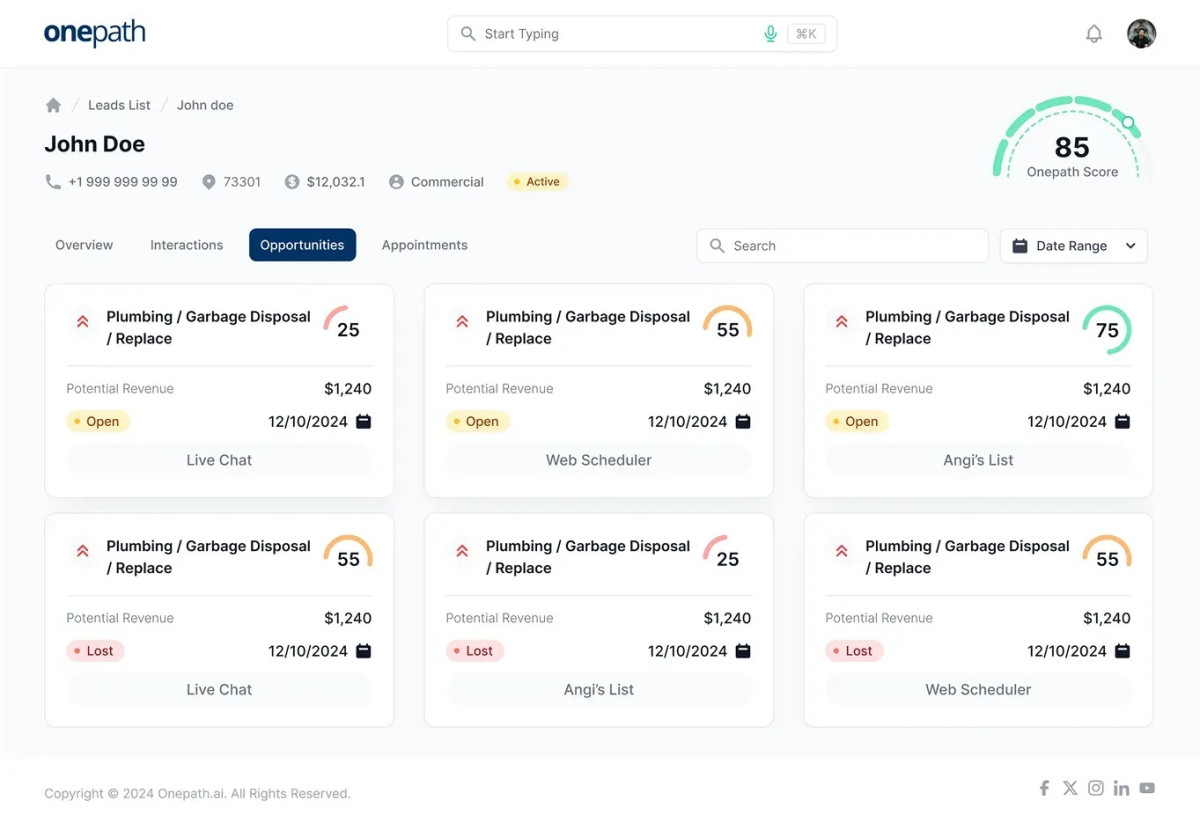
Onepath Launches AI-Powered Outreach Tool For $600 Billion Home Services Industry

Image

Core Findings

  • Onepath has launched an AI-native outreach tool specifically for the $600 billion home services industry.
  • Six specialized AI agents automate the marketing pipeline from natural language prompts to multi-channel execution.
  • Contractors can deploy professional campaigns in under five minutes, eliminating the need for expensive agencies.
  • The platform integrates directly with ServiceTitan and HousecallPro to leverage existing customer data.

The Digital Shift in Trades

The numbers tell the story. Home services represent a staggering $600 billion in annual U.S. revenue, yet the local plumbers, electricians, and HVAC technicians driving those figures often lack the bandwidth to manage sophisticated digital marketing. Onepath is closing that gap. By transforming dormant customer spreadsheets into active revenue drivers, this new AI-powered outreach platform provides small businesses with the capabilities of a full-scale marketing department without the traditional overhead costs.

Five Minutes to Deployment

Speed defines success. While traditional marketing cycles typically require days of coordination and significant financial investment, Onepath enables a contractor to describe a promotion in everyday language and launch a multi-channel campaign in under five minutes. Precision matters. This system bypasses the complexity of enterprise tools, allowing a technician to send a targeted $99 heating tune-up offer to specific Seattle customers via text and email with a few simple keystrokes.

The Six-Agent Architecture

Efficiency is baked into the code. Six specialized AI agents power the backend of the Outreach Campaigns tool, handling everything from prompt validation and parameter extraction to customer matching and message generation. This is an AI-native solution. Because the architecture is purpose-built for the trades, the system understands the specific nuances of service-based businesses, ensuring that every communication remains professional and relevant to the local market.

Strategic Integrations

Data drives growth. By integrating seamlessly with dominant field service management platforms like ServiceTitan and HousecallPro, Onepath allows contractors to capitalize on the information they already own. CEO Utku Kaynar notes that enterprise tools are often too complex while simple tools lack the necessary intelligence. This middle ground provides a smart, scalable path forward. The platform now automates the entire customer journey, scoring opportunities and scheduling appointments to keep the focus on the work itself.

The Bottom Line

The tech is here. As the industry evolves, the ability to re-engage existing customer lists with surgical precision will separate the leaders from the laggards in the competitive home services landscape.

Autonomous Growth in the Trades

Efficiency scales. By synthesizing disparate data points from established field service management software, Onepath permits a single technician to orchestrate sophisticated multi-vector marketing strategies that previously demanded an entire agency’s creative and analytical staff. Data wins. The architectural shift toward AI-native tools removes the friction of technical literacy, allowing plumbers and electricians to command complex digital ecosystems through simple verbal commands.

Predictive Maintenance Integration

Precision is paramount. Future iterations of this technology will likely incorporate predictive maintenance algorithms that analyze historical service cycles to automatically alert homeowners for seasonal repairs before catastrophic system failures occur. Forethought pays. This transition from reactive service to proactive care ensures that local contractors maintain a constant, helpful presence in the lives of their customers without requiring manual oversight or constant administrative intervention.

Algorithmic Reliability

Logic governs. The six-agent framework ensures that marketing messages remain grounded in factual service availability and geographic relevance, preventing the common hallucinations associated with generalized large language models. Verification matters. Each agent performs a specific audit, from verifying the prompt’s intent to ensuring the final message adheres to the brand’s established voice and regional pricing structures.

Bonus: The Rise of Hyper-Local Personalization

Location defines. AI-native outreach now allows for neighborhood-specific campaigns that mention localized weather events or community-wide infrastructure issues, creating a sense of immediate relevance that generic marketing cannot replicate. Community connects. As these tools evolve, the "digital handshake" becomes more authentic, allowing a business owner in a specific zip code to reach their immediate neighbors with surgical accuracy and minimal waste.

Industry Pulse Survey

To understand the current trajectory of digital adoption among skilled trades, the following statistics represent the shifting sentiment within the $600 billion home services market.

  • Current Sentiment: 72% of contractors believe AI will reduce their administrative workload by at least ten hours per week.
  • Adoption Speed: 64% of small service businesses plan to implement automated customer re-engagement tools within the next twelve months.
  • Obstacles: 41% of technicians cited "complexity of existing software" as the primary barrier to digital marketing, a hurdle the five-minute deployment model directly addresses.
  • Economic Impact: Companies utilizing integrated AI outreach report a 25% higher customer retention rate compared to those relying on traditional manual scheduling.

The Scalable Future

Complexity fades. The democratization of high-level marketing tools ensures that the quality of craftsmanship, rather than the size of a marketing budget, determines which local businesses thrive in an increasingly digitized economy. Quality survives.

More takeaways: Check here