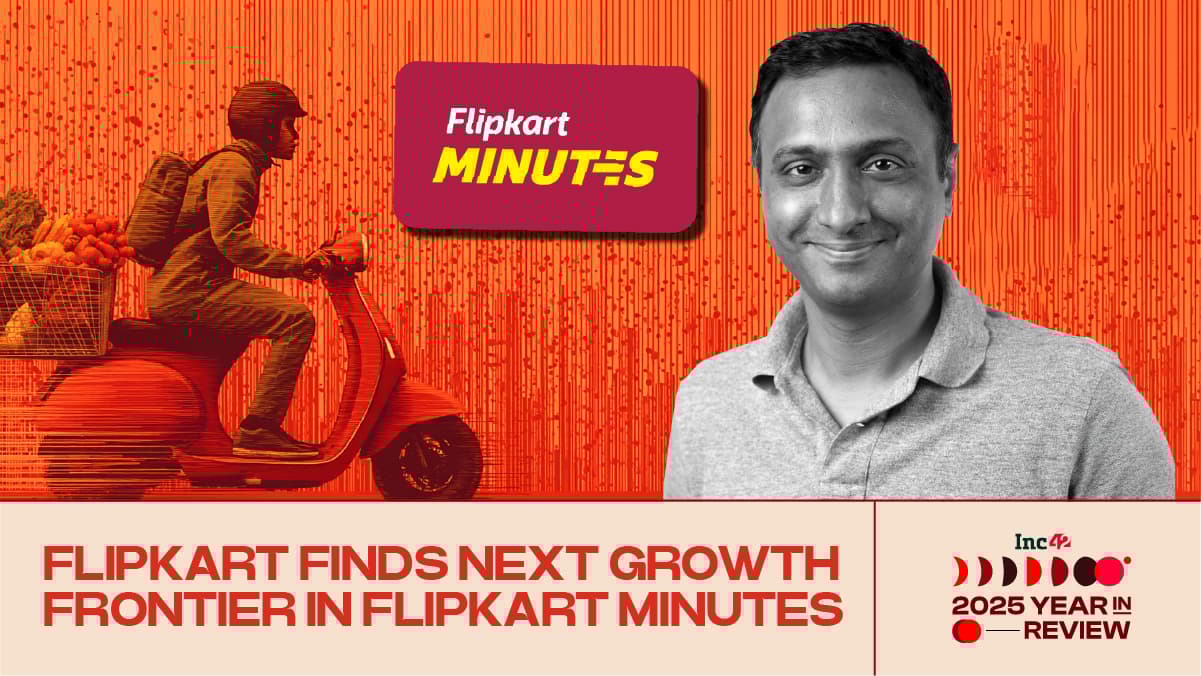
Flipkart's foray into quick commerce has been marked by aggressive expansion, with its service, Flipkart Minutes, scaling operations to over 30 cities, including Tier II and Tier III towns. [1] The company aims to double its network and reach 1,000 dark stores by March 31, 2026. [1] The quick commerce sector is expected to grow significantly, valued at $6 billion in 2025 and projected to reach $40 billion by 2030. [1] This growth has made it imperative for Flipkart to establish a strong presence in the market.
Flipkart's journey has been transformative, particularly since its acquisition by Walmart in 2018. [1] The company has faced numerous challenges, including questions about its profitability and Indian identity. [1] Despite these challenges, Flipkart has continued to evolve, with a focus on innovation and disruption.
The company's potential initial public offering (IPO) has been a topic of discussion, with some speculating it could be one of the largest from the Indian tech startup ecosystem. [1] However, others believe that achieving profitability at a revenue scale of over INR 40,000 crore and a private valuation of nearly $36 billion would be a more significant milestone.
The Indian e-commerce landscape has undergone significant transformations recently, driven by the growing demand for online shopping and the increasing penetration of smartphones and internet connectivity. According to a report by Inc42 Media, the Indian e-commerce market is expected to reach $150 billion by 2026, growing at a compound annual growth rate (CAGR) of 25%. [1] This growth has been fueled by the rise of new business models, including quick commerce, which has emerged as a key trend in the Indian e-commerce space. The growth of quick commerce has been driven by changing consumer behavior and preferences, with more and more people seeking fast and convenient delivery options.
[2] This trend has been further accelerated by the COVID-19 pandemic, which has forced consumers to adapt to new ways of shopping and interacting with retailers.
As a result, e-commerce companies have had to innovate and adapt to meet the changing needs of consumers, investing heavily in logistics and supply chain infrastructure to enable faster and more efficient delivery.
The increasing competition in the Indian e-commerce space has also driven innovation and investment in new technologies, including artificial intelligence (AI) and machine learning (ML). [3] These technologies are being used to personalize the shopping experience, improve customer service, and optimize logistics and ← →
Find other details related to this topic: See hereFlipkart's aggression in building the quick commerce business stood out in 2025, even as there was pressure to deliver profits in the early parts of...●●● ●●●

No comments:
Post a Comment